
About CryoArcana The Experts' Experts
CryoArcana is a founder-led cryoEM and cryoET services, training, and consulting firm. We bring cutting-edge academic expertise to the rapid pace of industry. With over 20 years of combined cryoEM/ET experience across world-class facilities, we help biotech and pharma teams worldwide accelerate their drug discovery and structural biology programs.
Our Mission
Structural biology has undergone a revolution with the advent of high-resolution cryo-electron microscopy (cryoEM) and tomography (cryoET) — advancements recognized by the 2017 Nobel Prize in Chemistry. However, accessing top-tier expertise remains a significant barrier for many biotech and pharmaceutical companies. The high capital cost, steep learning curve, and scarcity of expert talent often create bottlenecks in drug discovery and structural biology pipelines.
We founded CryoArcana to remove these barriers. We act as your on-demand cryoEM/ET department, providing the expertise and execution you need without the overhead.
Whether you need to assess how best to deploy cryoEM for a new target, optimize a challenging sample, high-resolution structure determination guidance, or access expert advisory across the entire pipeline, we integrate seamlessly with your team to deliver results.
Meet The Founders
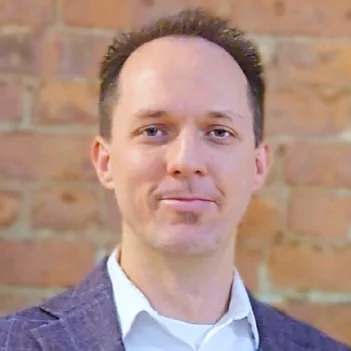
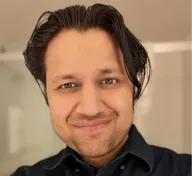
Alex J. Noble, PhD
Co-Founder
Physicist with 15+ years in cryoEM/ET. Instrumental in establishing SRAMM, SMLC, and NCITU at NYSBC; previously at FSU. Alex has authored 30+ scientific publications, is a recognized expert in the fields of cryoEM, cryoET, and cryoFIB-SEM, and has delivered 70+ talks and 35+ workshops globally.

Aygul Ishemgulova, PhD
Co-Founder
With 9+ years specializing in cryoEM and cryoET at world-class facilities including NYSBC/SEMC (world's largest cryoEM facility), CEITEC, and Columbia University, and 8+ years of experience in molecular biology. 13+ peer-reviewed publications. Supported hundreds of cryoEM projects.
Key Publications
Our team has contributed to foundational methods and high-impact biological discoveries.
Topaz neural network particle picking
Introduced Topaz, a neural network-based particle picking framework that addresses challenges of picking particles from noisy cryoEM micrographs, particularly for non-globular, small, or aggregated proteins.

Topaz-Denoise: general deep denoising models for cryoEM and cryoET
Presented Topaz-Denoise, a deep learning method for denoising cryoEM and cryoET data, widely adopted to improve signal-to-noise ratio in challenging samples.

Preparation Of Labeled Cryo-ET Datasets For Training And Evaluation Of Machine Learning Models
Addresses the lack of diverse ground truth datasets for training ML models in cryoET by collecting datasets with carefully chosen protein mixtures and organisms for annotation.
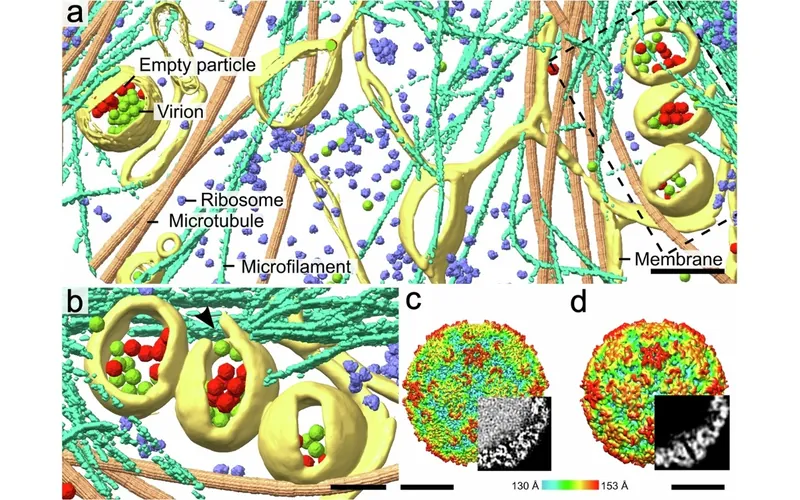
Endosome rupture enables enteroviruses from the family Picornaviridae to infect cells
Used cryoEM/ET to visualize enterovirus cell entry, revealing that endosomes containing viruses deform, rupture, and release contents into the cytoplasm—a critical step in infection.
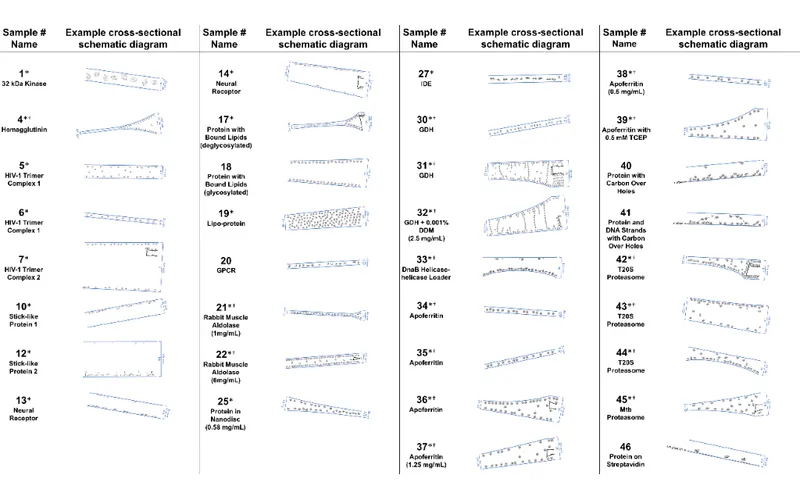
Routine single particle CryoEM sample and grid characterization by tomography
Demonstrated that ~90% of particles in single-particle cryoEM are adsorbed to the air-water interface, with wide-ranging implications for protein denaturation and preferred orientation.
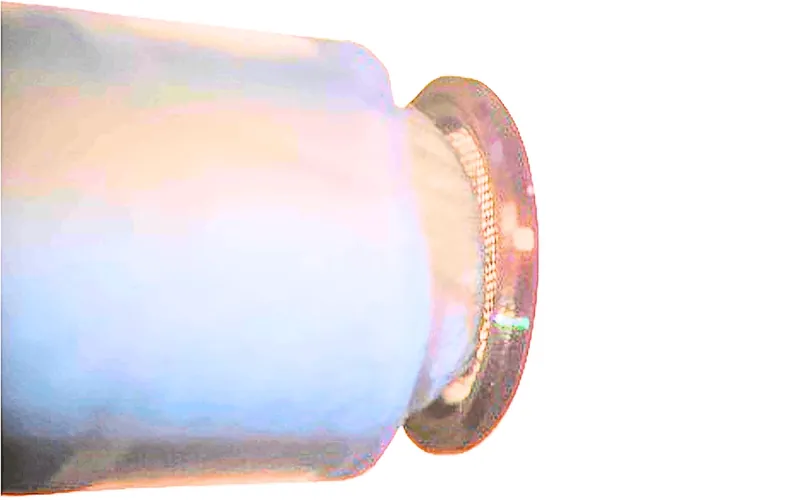
CryoCycle your grids: Blotting, vitrifying, and reusing clipped cryo-EM grids
Introduced a novel method allowing reliable blotting, vitrification, and reuse of clipped cryoEM grids, significantly reducing costs and democratizing access to cryoEM.
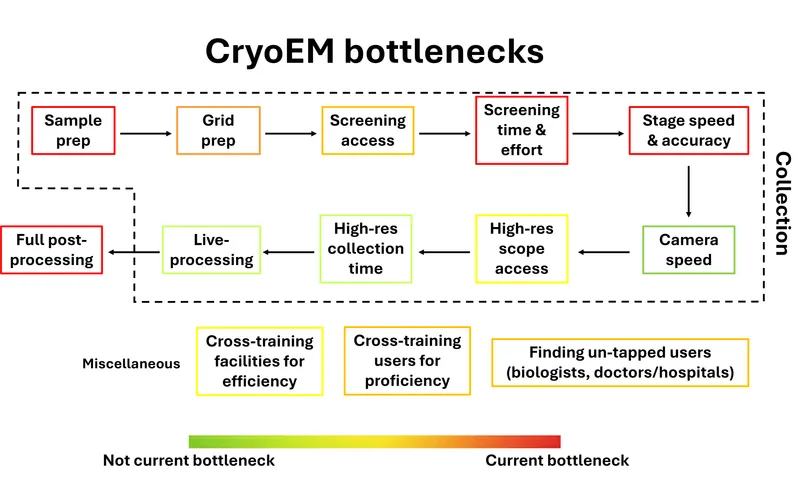
Fully automated multi-grid cryoEM screening using Smart Leginon
Developed Smart Leginon Autoscreen, an automated software that autonomously loads and images multiple grids, drastically reducing screening time from hours to minutes per grid while increasing throughput.
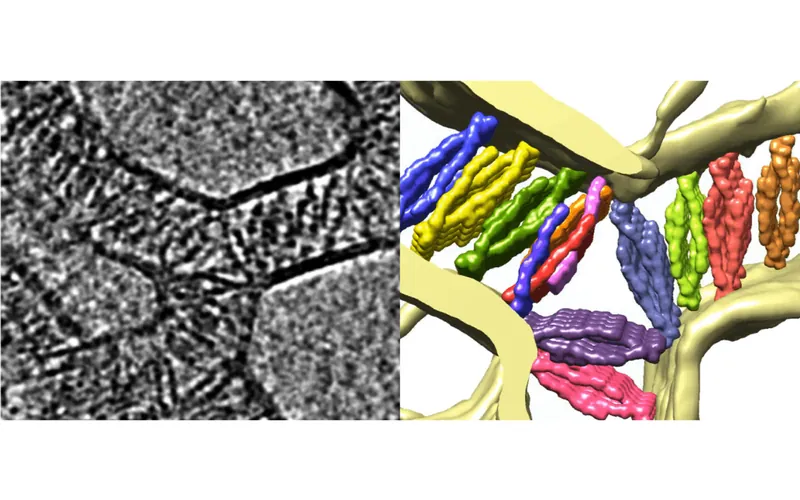
Visualization of clustered protocadherin neuronal self-recognition complexes
Used cryoET to reveal linear zipper-like assemblies of clustered protocadherins at membrane contact sites, providing insight into the molecular basis of neuronal self-recognition.
Why We Are Trusted
What Leading Scientists Say
"Following the Topaz workshop at Van Andel Institute, Topaz has become an important component of our cryo-EM data-processing workflows. We have found that Topaz can function both as a standalone particle-picking method and in combination with traditional blob- and template-based approaches. Topaz consistently identifies a high proportion of true particles that yield strong 2D class averages and often captures additional particle views that are missed by other methods. In practice, combining Topaz with complementary picking strategies and removing duplicates produces a more comprehensive and higher-quality particle set for downstream 3D reconstruction and refinement."
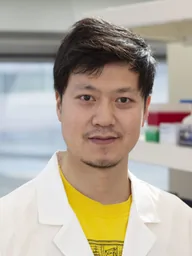
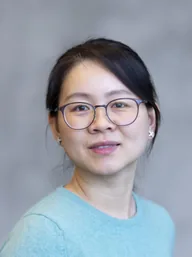
Drs. Diessel Duan, Qinglong You, Meinan Lyu, and Huilin Li
Research Scientists, Lab of Dr. Huilin Li
Van Andel Institute
Let's Discuss Your Project
Free feasibility audit. We're happy to sign your NDA before discussing project details.
Contact Us Directly
Projects:
Partnerships:
Topaz Masterclass:
General:
Call/txt us:
Confidentiality
- All projects under NDA
- Secure data handling
- Founder-led review